System Transformation Strategies
Turning System & Portfolio Approach into Products
MOTIVATION
Make the system and portfolio approach usable beyond the people who designed it. Turn a new methodology into clear, well-crafted products that UNDP country teams and partners can use to design a system portfolio, and build ownership needed for this work to succeed.
MY ROLE
Turning the portfolio approach into products and facilitating the process in certain countries:
1. Customising the methodology to each context and preparing the materials (agenda, canvases, printing). I directly support countries in Latin America and Africa.
2. Facilitating portfolio co-design sessions, advising teams and sharing examples from other countries.
3. Creative direction of the portfolio approach product design system: visual identity, canvases and portfolio visualisations.
4. Mentoring regional and country teams so they can run and adapt the process on their own.
5. Briefing and managing design consultants.
DESIGN CREDITS
Bia Janoni (portfolio approach visual identity)
Rafael Poloni and Bruna Haesbaert Dipp (canvases)
Asdrubal Fabris (portfolio visualisations)
CONTENT CREDITS
Milica Begovic
Ida Uusikyla
Digital, AI and Innovation Hub (specially team members of the former Strategic Innovation Unit facilitating the methodology)
SELECTED COUNTRY PORTFOLIOS, I AM WORKING WITH:
Xoán Fernandez
Diego Suarez
Echo Collins-Egan
This is a photograph of a continuous process of codifying, simplifying and democratising the portfolio approach for system transformation. It happens through practice, and it has basically been my job since I joined the team in 2022. Given the broad range of countries UNDP supports and our limited design capacity inside the organisation, this context already points to a few design requirements that guide the work.
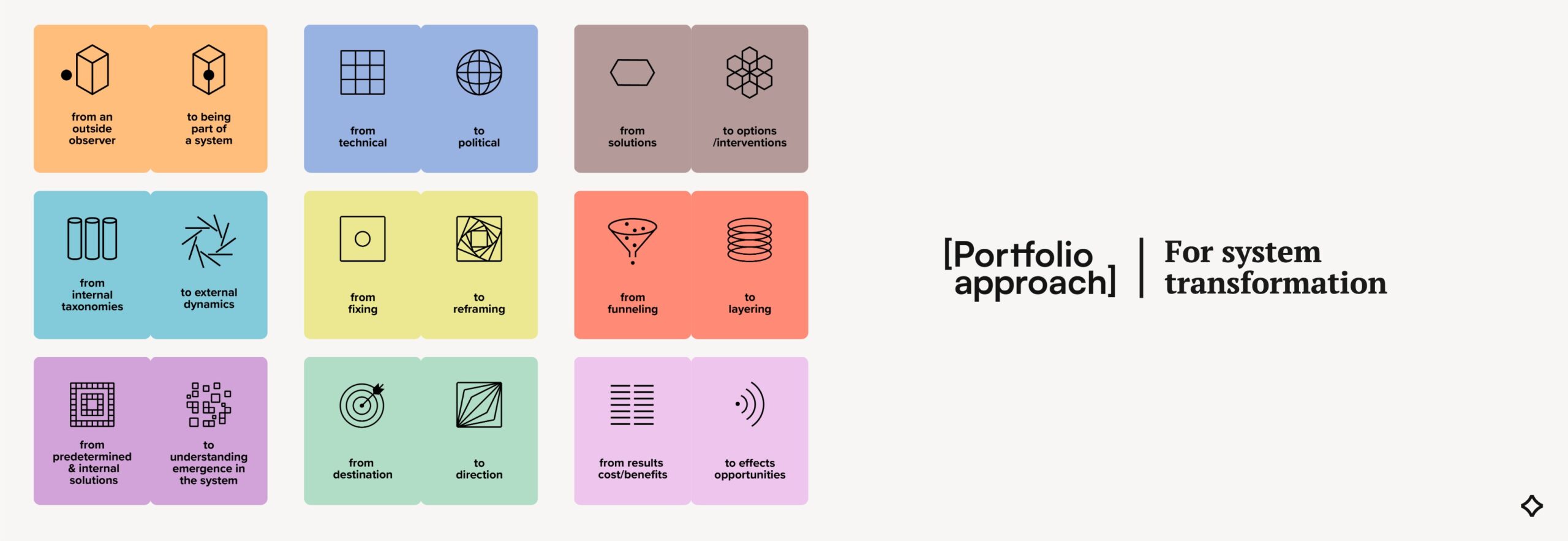
First, create a brand and a distinct look and feel that makes the approach and its methods easily identifiable, marking the milestone of an emerging development practice.
Second, build a system where methods and tools and portfolios are documented in a consistent format. Each part has a minimum viable objective but stays easy to customise: methods can be reordered, or dropped, when a context calls for it.
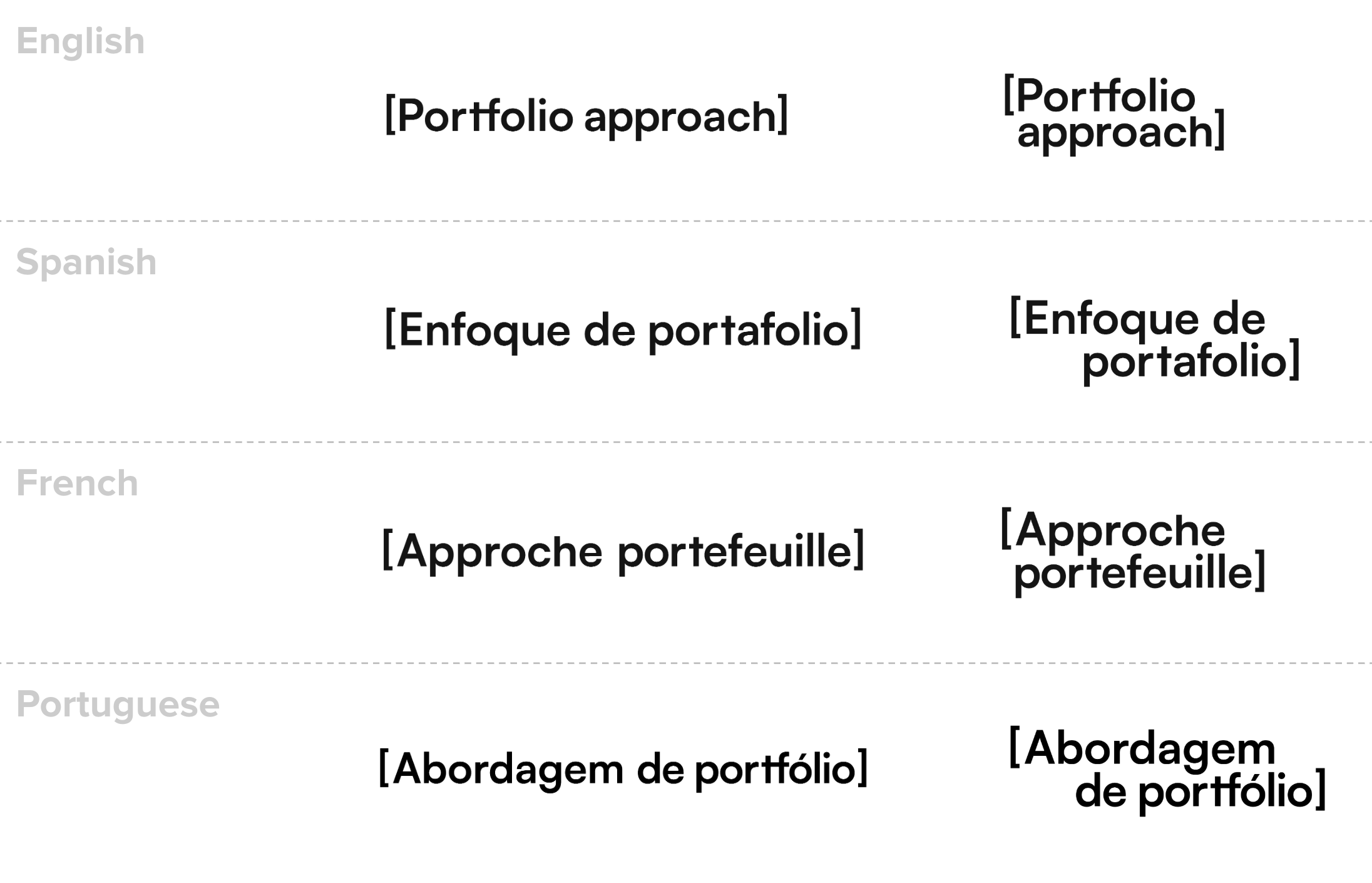
Third, make the methods available in multiple languages, translating and localising the jargon into something different countries can relate to.
Turning the portfolio approach into products
What is a portfolio?
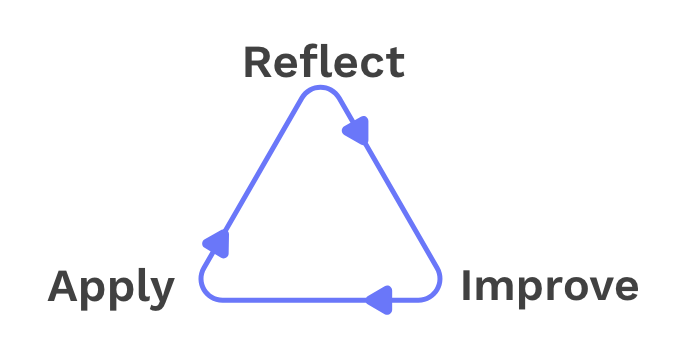
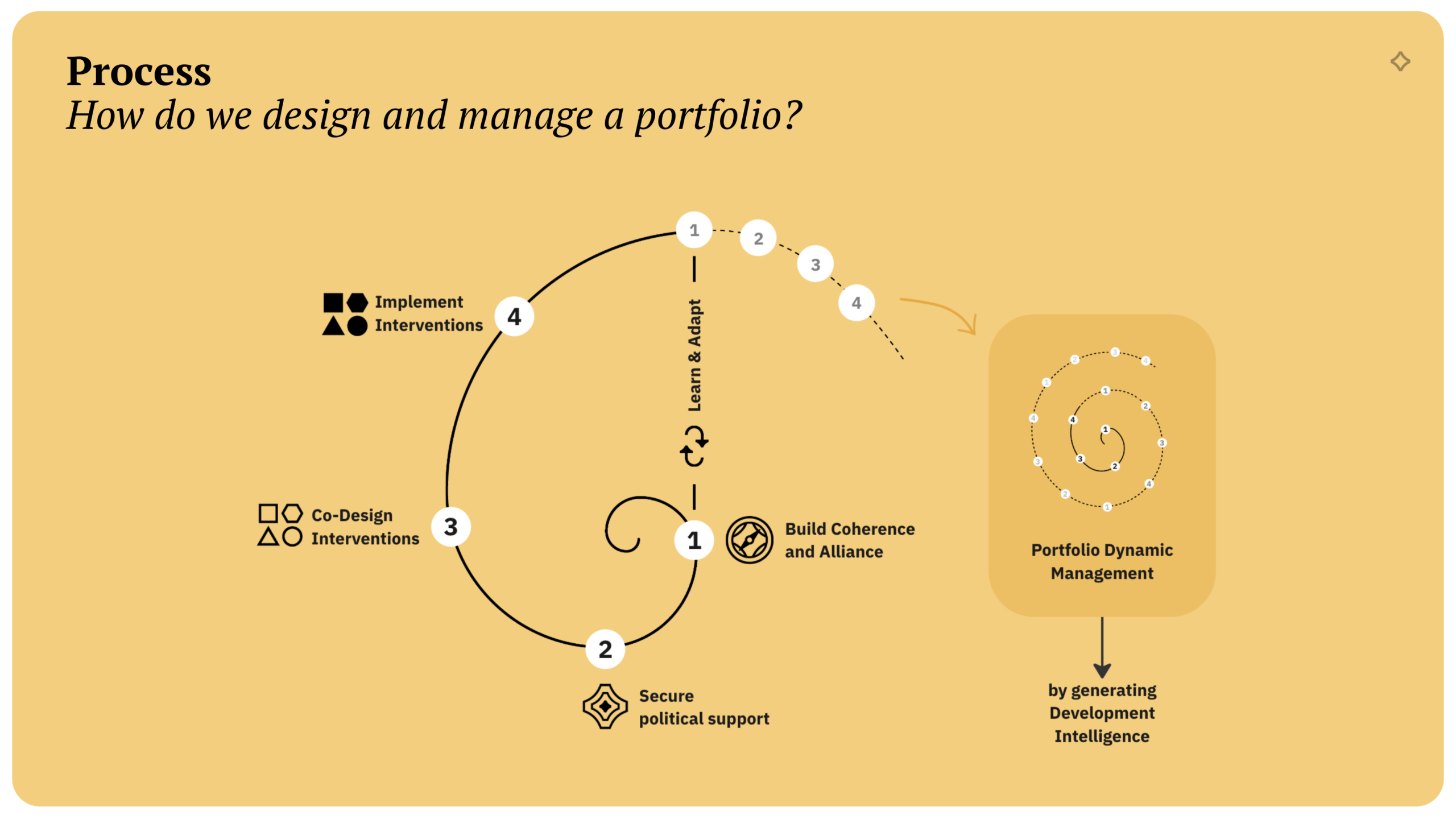
Portfolio is a set of interconnected interventions designed and dynamically managed to generate a continuous supply of new options when facing a challenge of system transformation.
What is unique about a portfolio for system change?
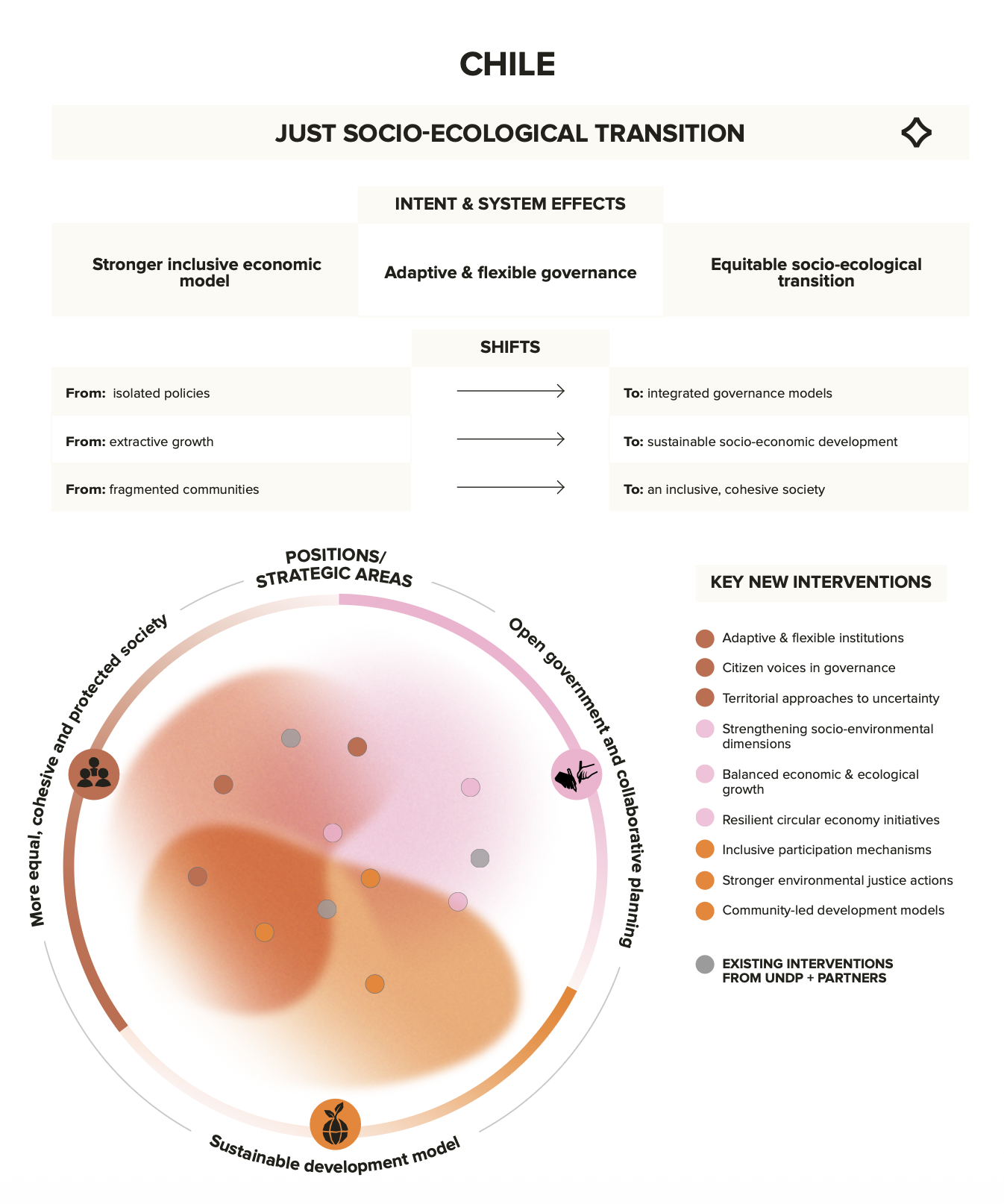
→ Intent and system effects articulate the long-term direction of change that guides collective action of partners around a complex policy issue.
→ Shifts describe the transition from the current to an emergent way of doing things that the portfolio aims to accelerate. They form the foundation of the Portfolio Results Framework.
→ Positions/strategic areas are spaces that feature existing dynamics and resources that if invested in and augmented can help emerging new ways of doing development accelerate.
→ Interventions are coherent sets of ongoing and new activities, rooted in the local dynamics and positions/ strategic areas. These interventions help generate learning and progress toward the overall intent.
System strategies in action
These are the portfolios I have supported from the very beginning and still accompany today. It is always a team effort: my part is to customise the methodology, prepare the materials and facilitate the process, drawing on examples from other countries. I measure success by how much ownership UNDP and its partners take of the work, and by how the portfolio keeps evolving through sensemaking and learning along the bumpy road of implementation. All examples below are publicly available at Moderzining Development publication.
Venezuela
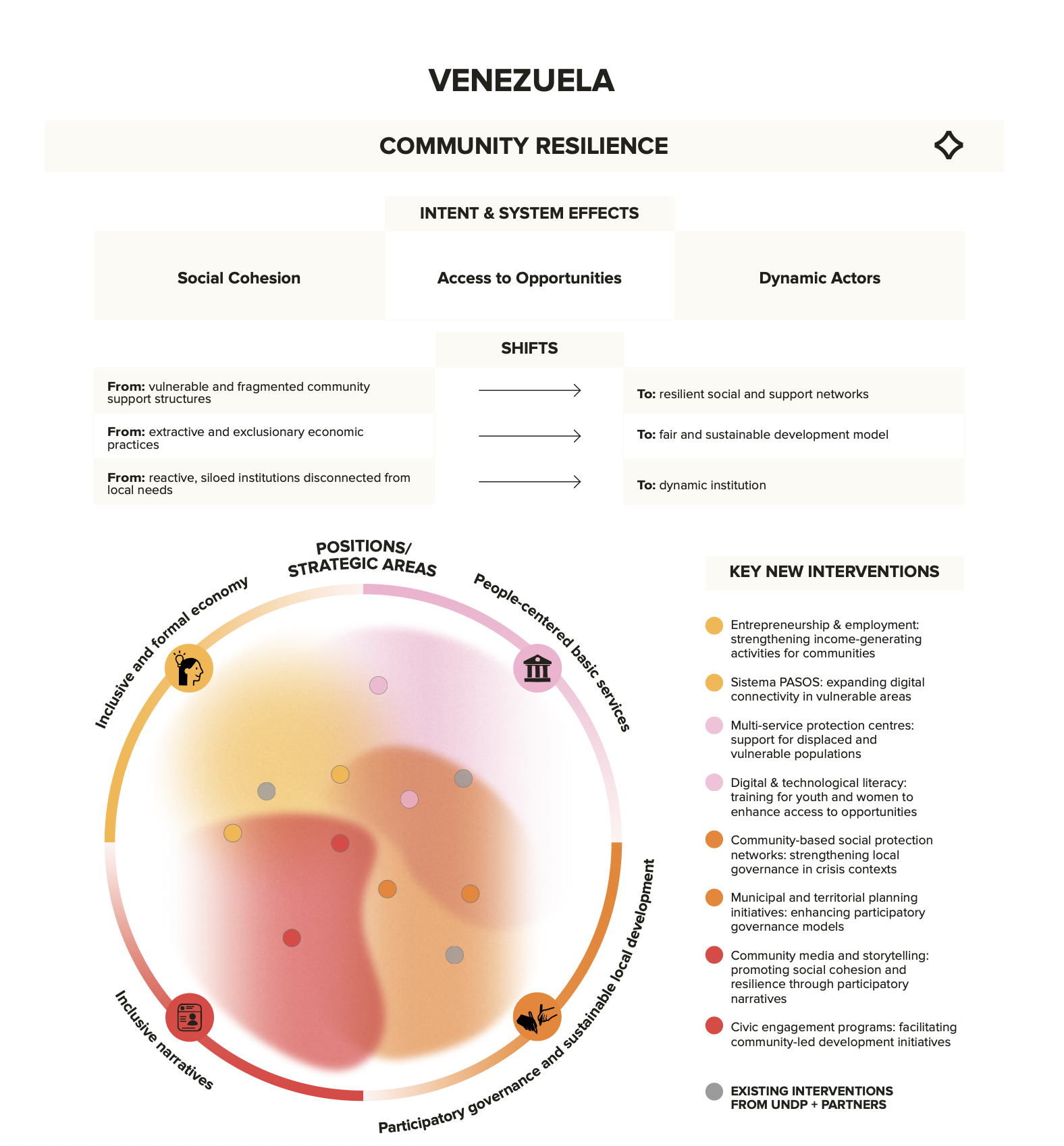
With an estimated 7.7 million people having left the country, returnees and the communities that receive them face acute pressure on basic services. The portfolio brings together UNDP, UNHCR and FAO around a shared community-resilience intent. Regular sensemaking keeps it adaptive: when the Banco de Hilos thread banks among Wayuu women showed how informal care and exchange already hold communities together, the portfolio moved to recognise these networks as the basis for a new integrated model.
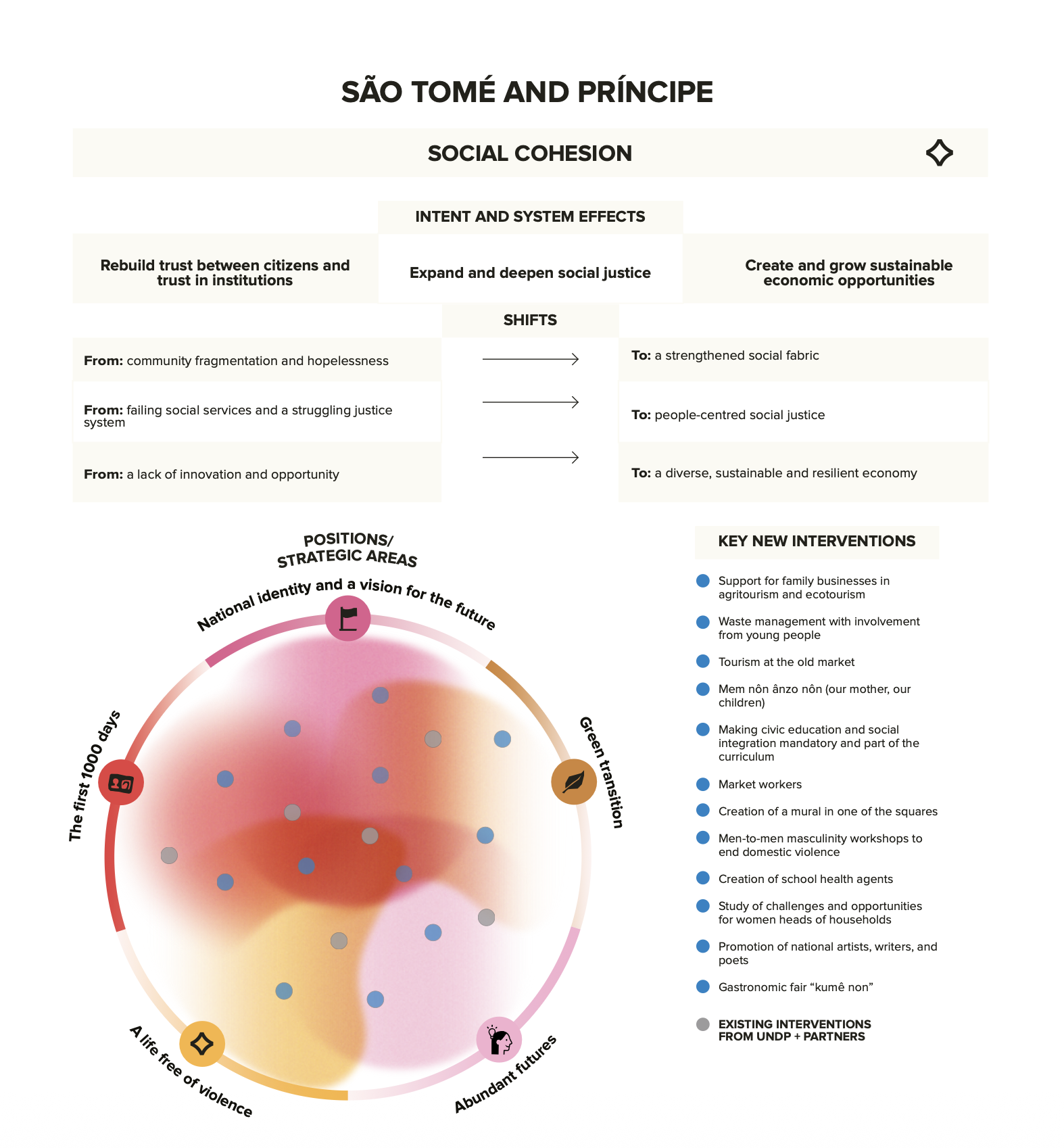
São Tomé and Príncipe
Facing distrust between communities and institutions, a coalition of partners agreed on a systems-informed frame and a long-term direction for social cohesion, one that reaches beyond governance and transparency. Rather than starting from scratch, the portfolio builds on what already works: waste-management initiatives, and sports and culture activities that grow soft skills and social ties. The recurrent sessions surfaced new opportunities too, such as pairing a national athletics competition with a youth-led orchestra performance.
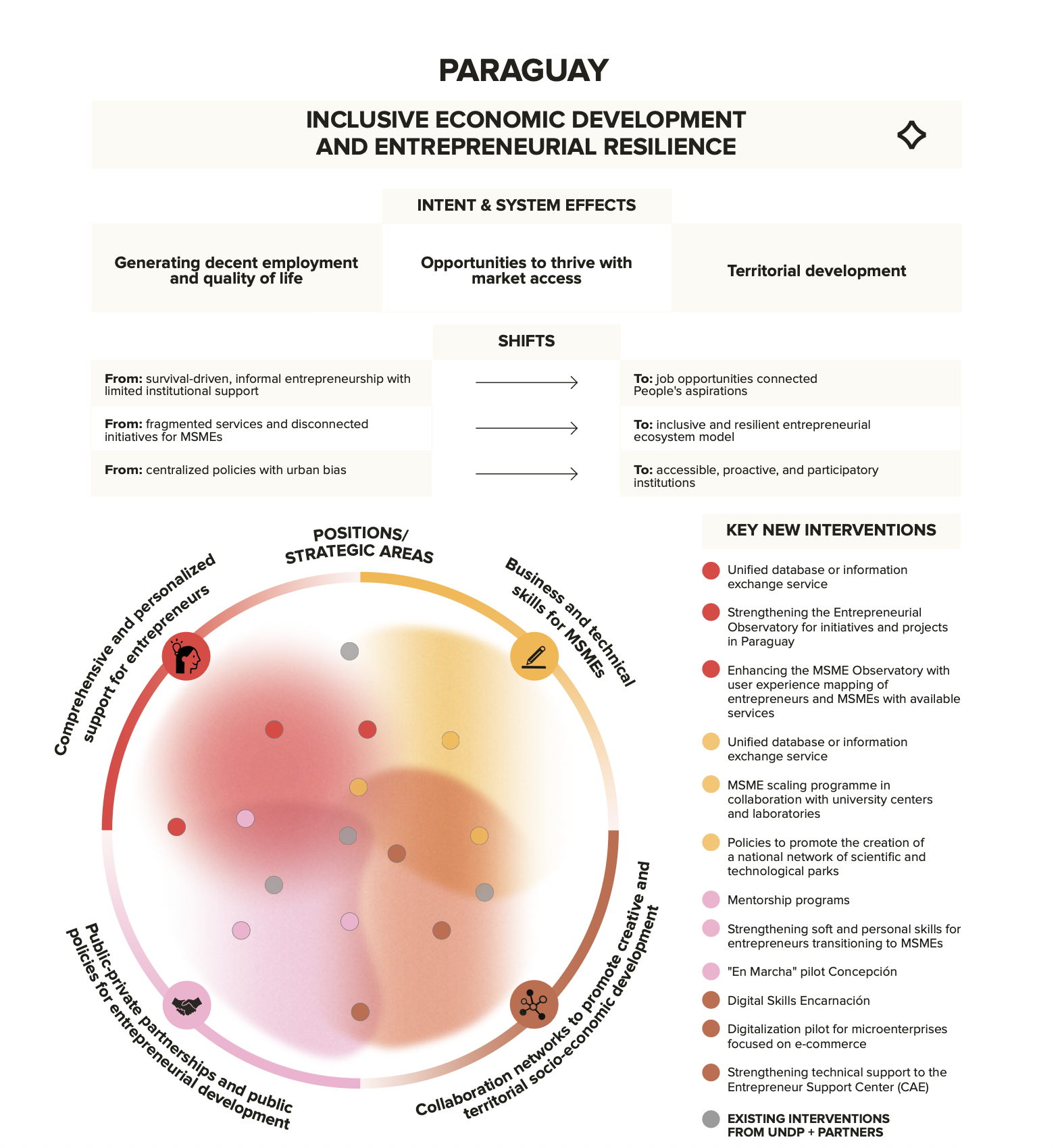
Paraguay
Many entrepreneurs stay informal because the support around them is fragmented and built for a one-size-fits-all economy that ignores how differently rural and urban areas work. Led by the Ministry of Industry and Commerce, the portfolio reframes informality as an opportunity and has drawn in five more ministries, universities, business associations and credit cooperatives. The breakthrough came when social and economic mandates aligned, linking small family farms to the national Zero Hunger Programme.
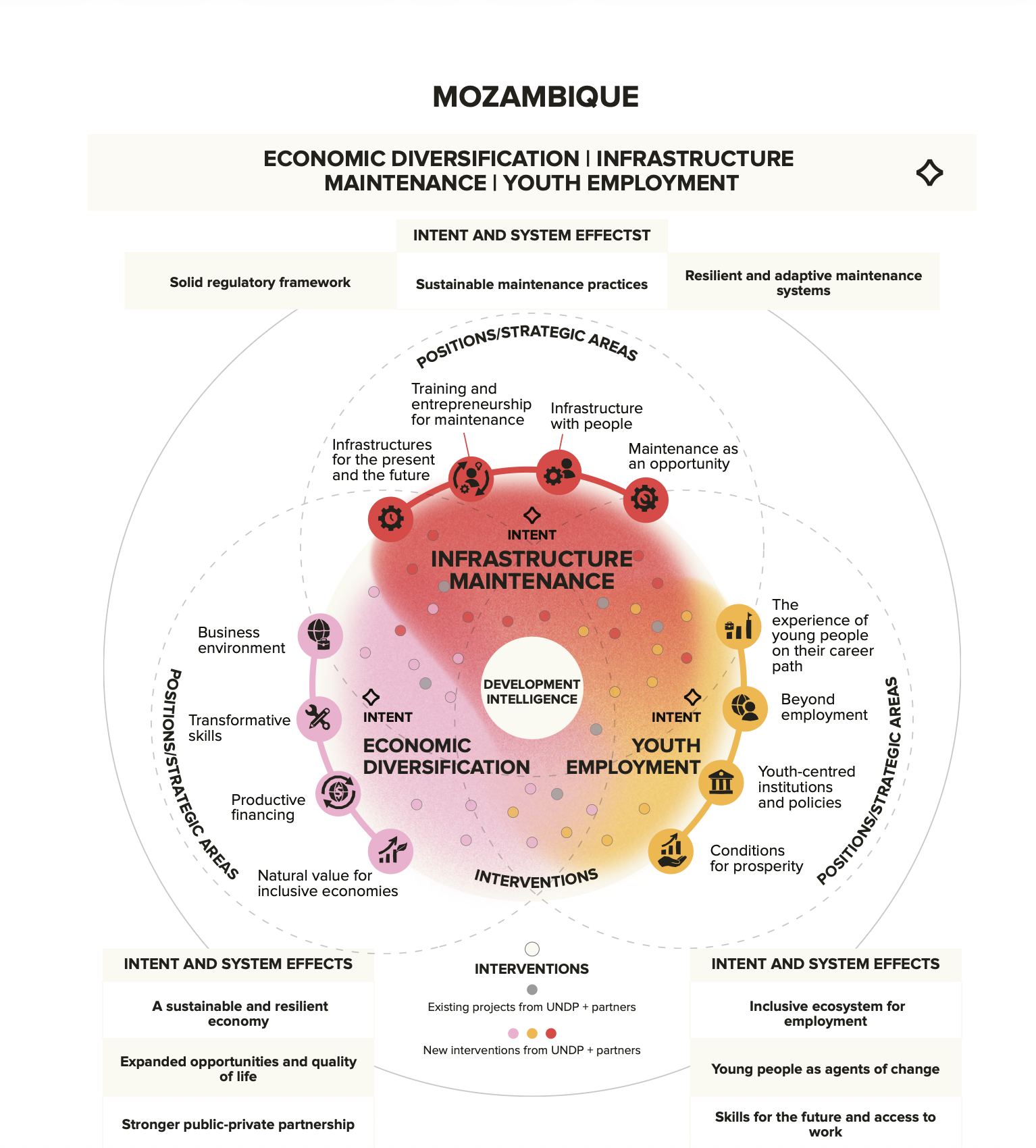
Mozambique (3 portfolios)
Infrastructure maintenance, for instance is required by law yet rarely happens, held back by administrative delays, too few technicians, funding with limited coordination, and local languages with no direct word for "maintenance". The portfolio reframes maintenance from a cost into an investment, one that can seed local businesses and jobs for young people. It convenes UNDP, UN Habitat and the ministries of public infrastructure, education and health around that shared agenda.
Work-in-progress 2026
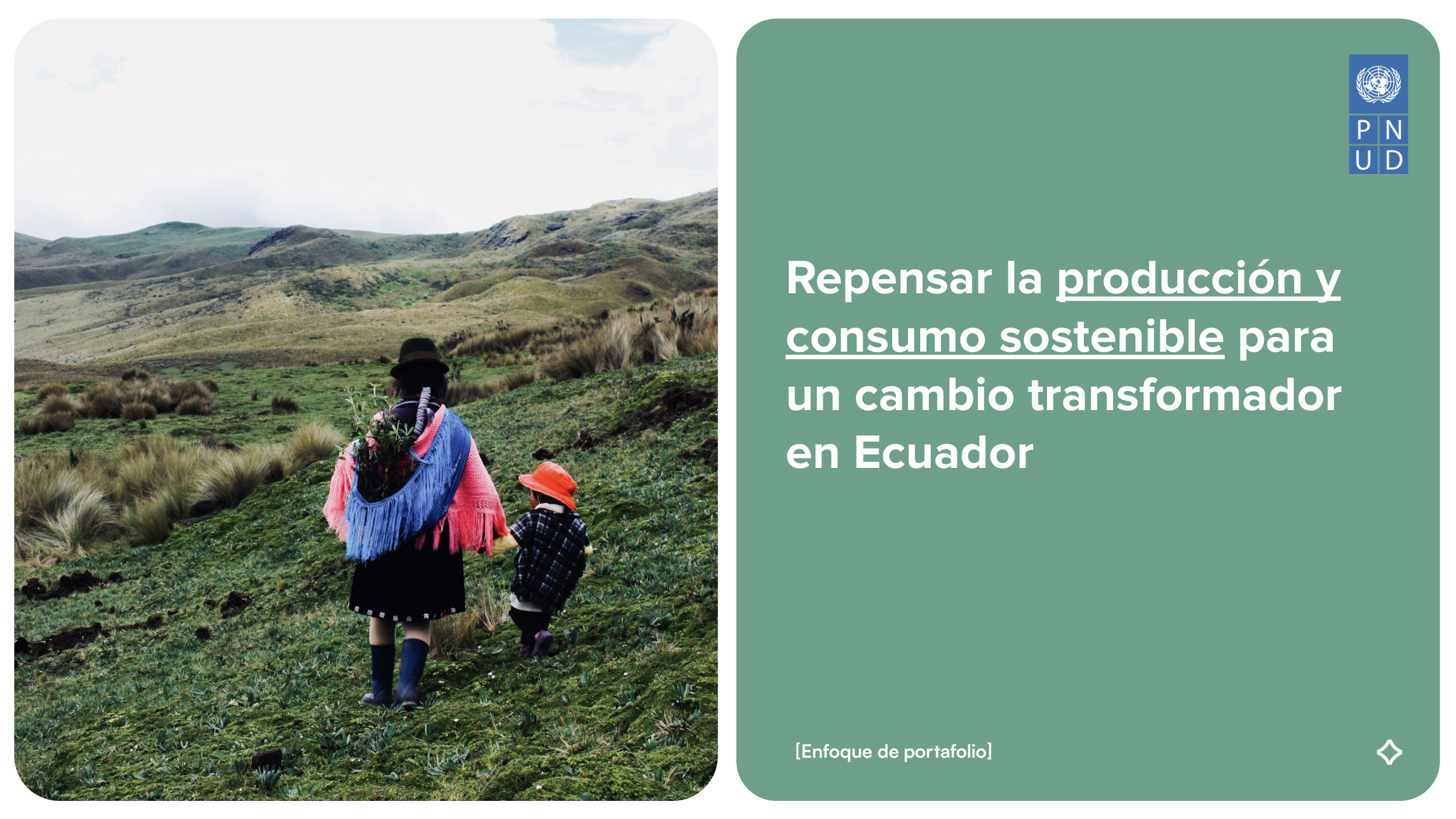
Ecuador
Sustainable Production and Consumption
Mexico
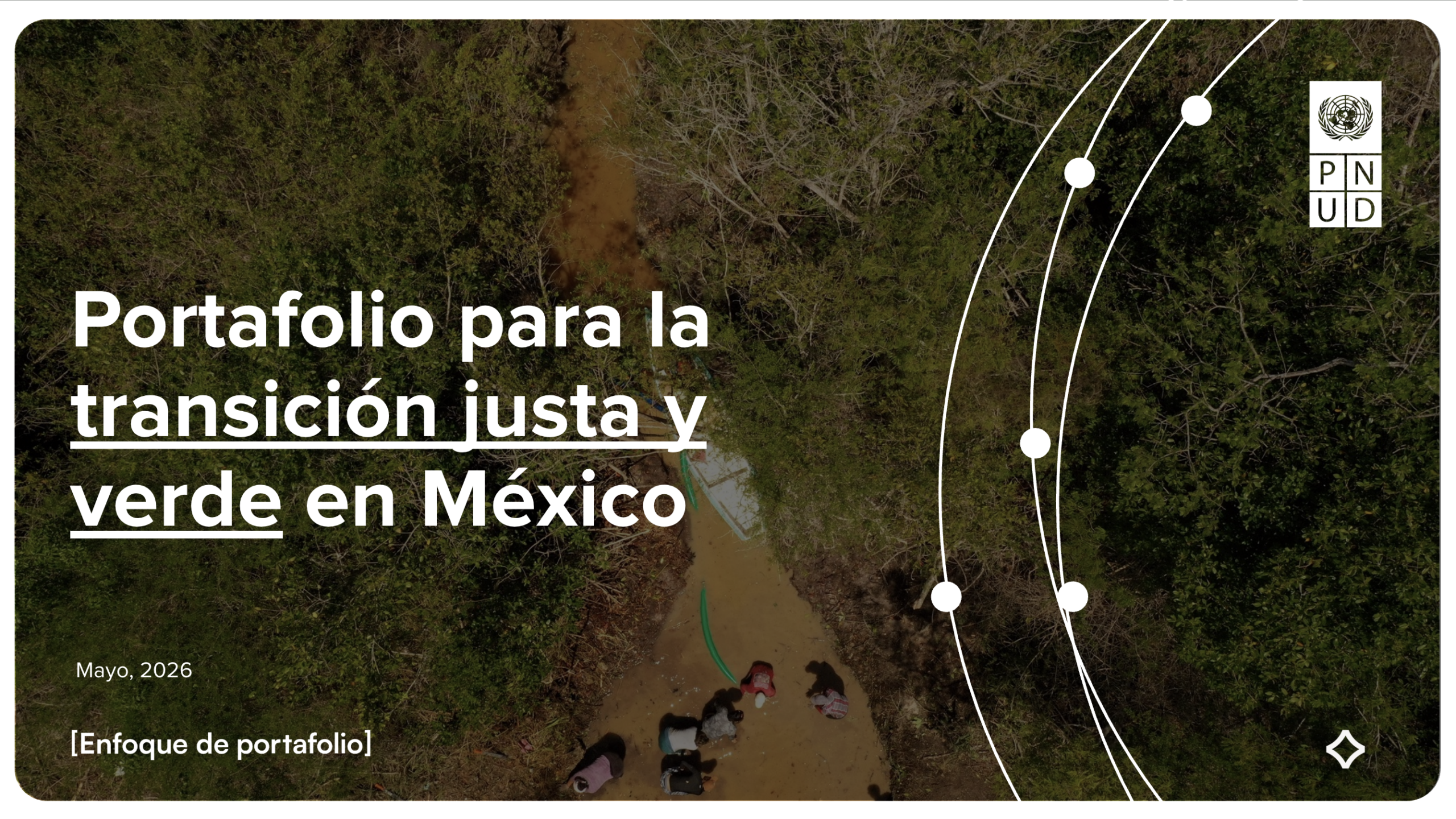
Green and Just Transition
Codified → develop products
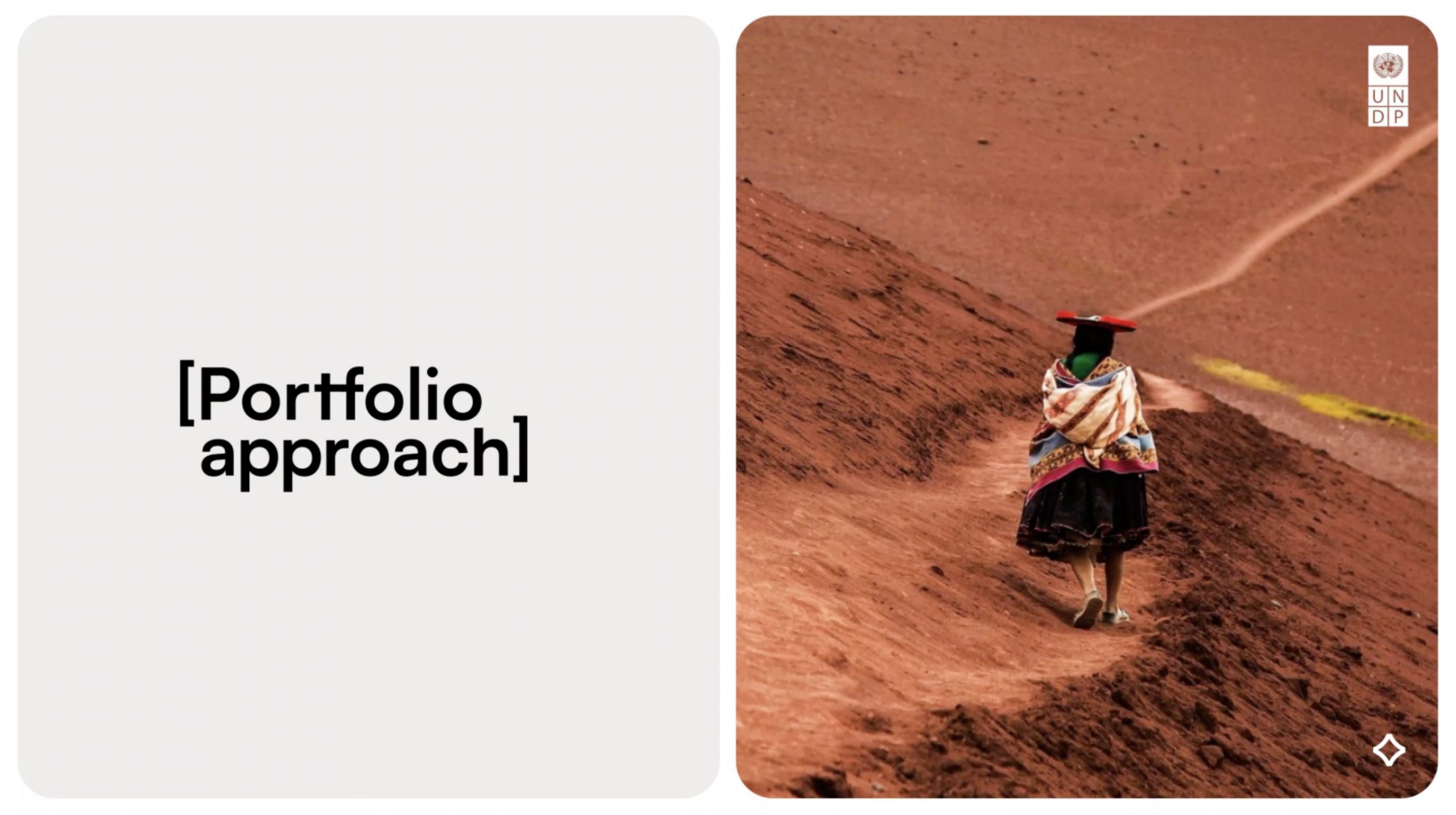
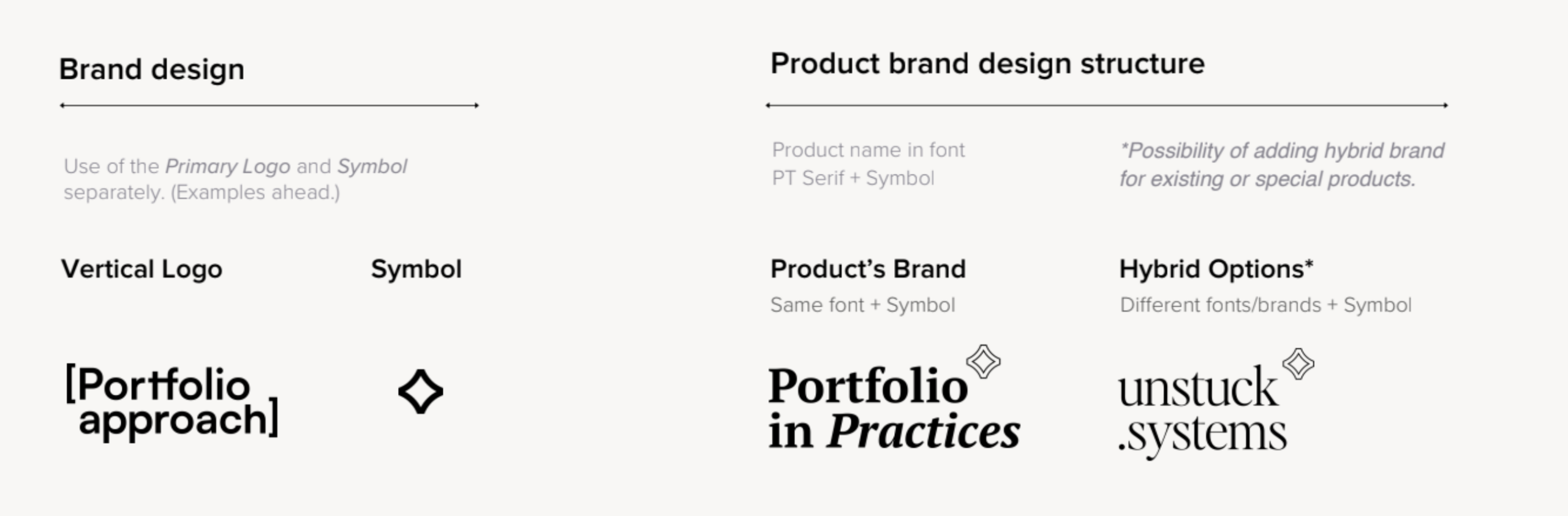
1. Visual Identity
Logo, colour palette, symbol and visual language. The priority was something simple that non-designers could apply to slides without specialised software.
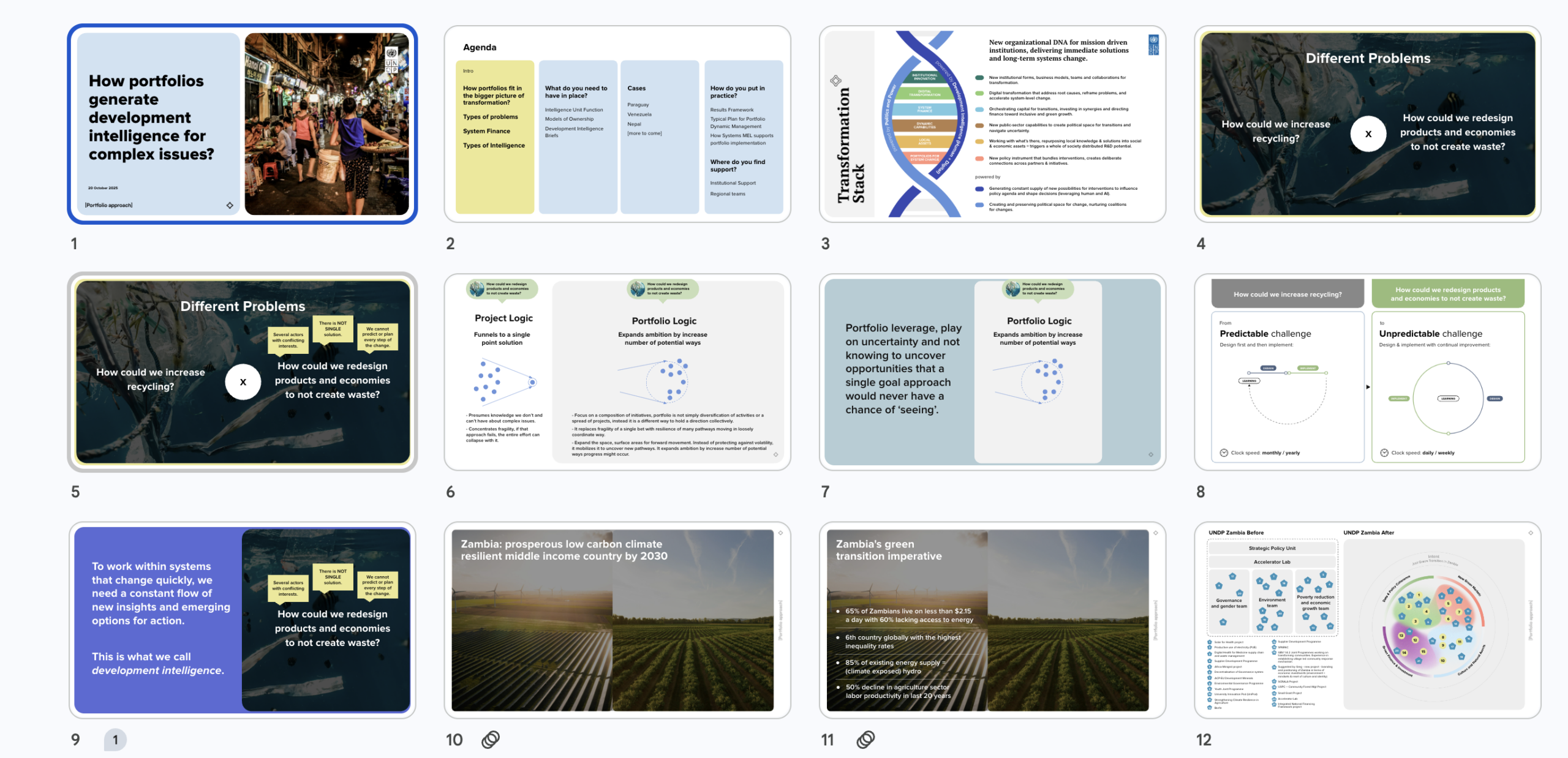
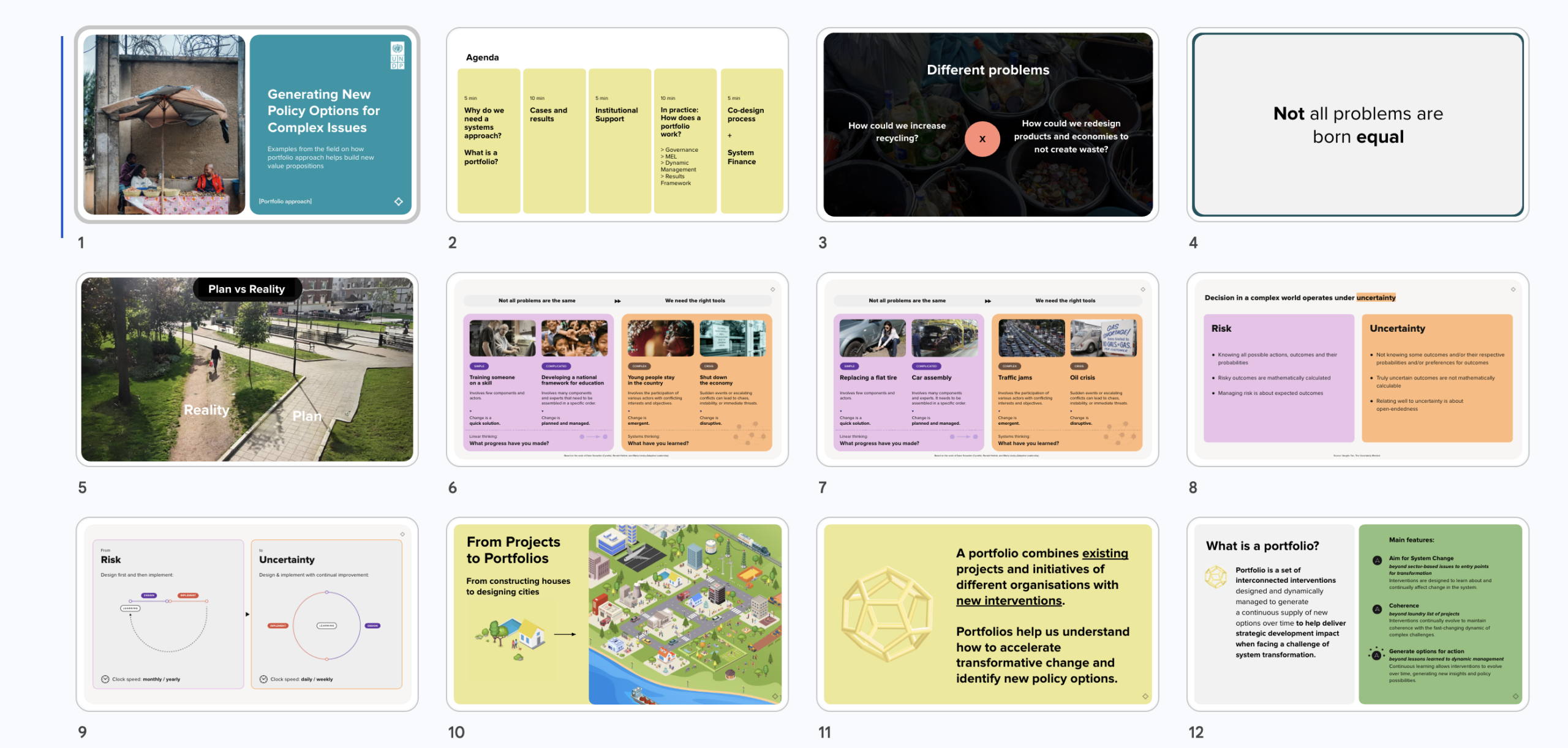
2. Slide Decks
Consistent use of the visual identity makes the decks distinctive but easy to adapt: individual slides can be copied and pasted into a new presentation without looking disconnected.
2. Product Architecture
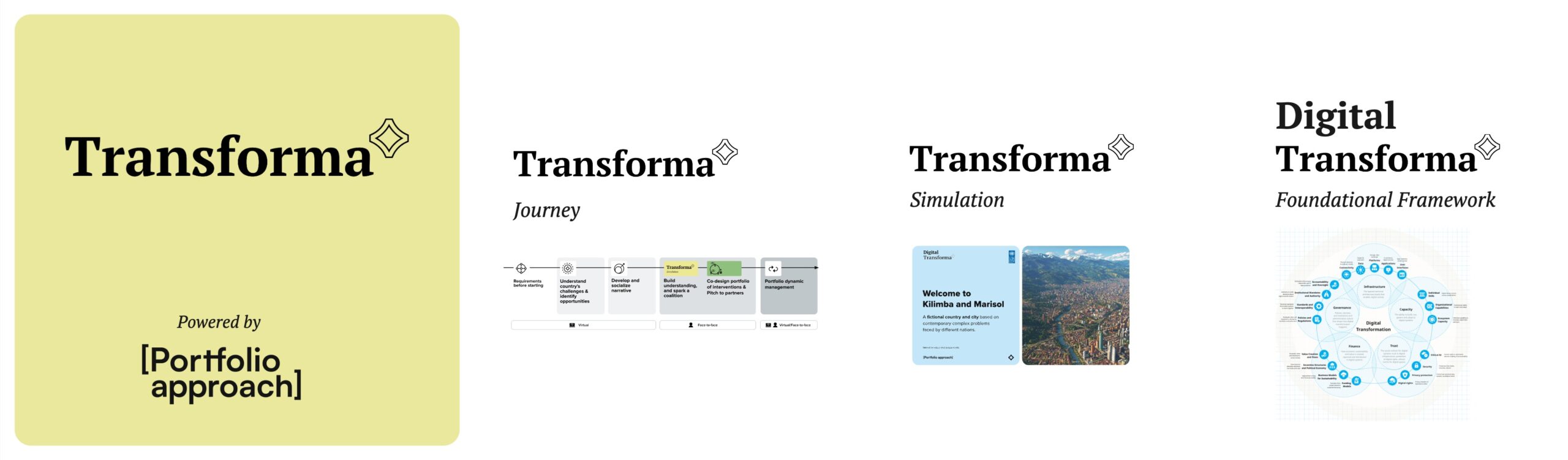
The logic for expanding portfolio-infused products into trainings, courses, webinars and tools. New product names avoid acronyms and always carry the "star" symbol.
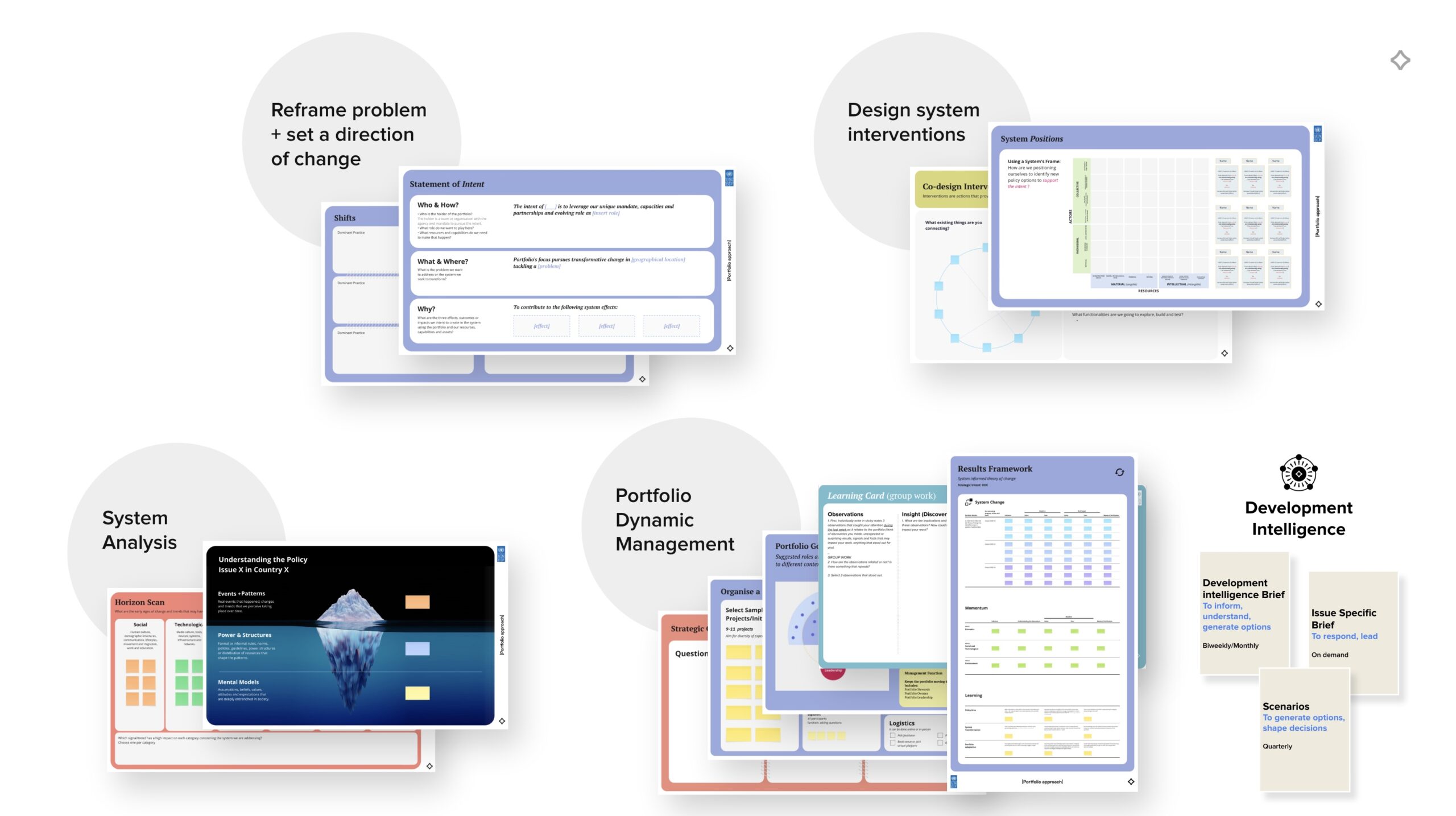
2. Process, Methods and Tools
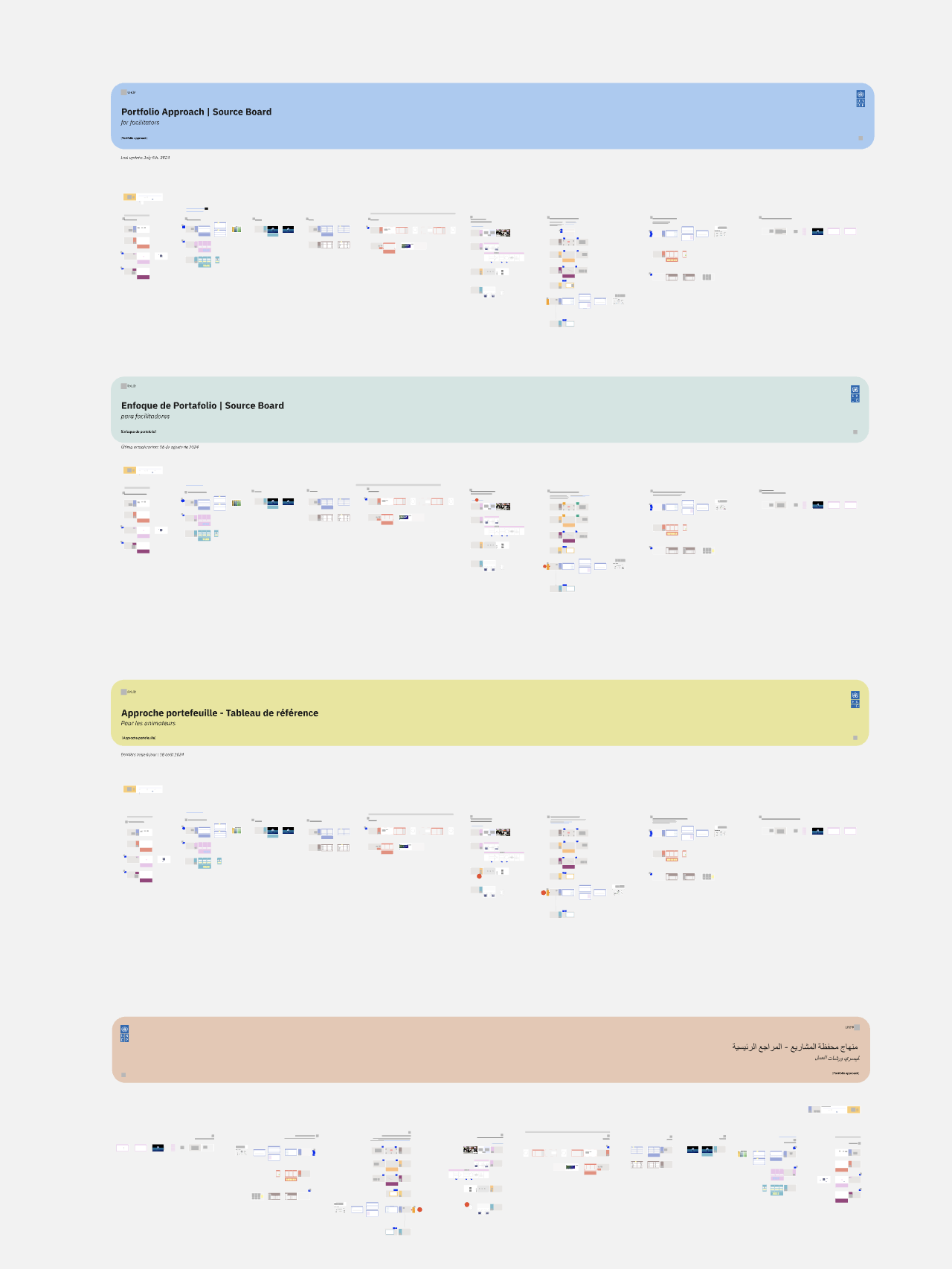
Ready-to-use methods and tools as canvases, made to be customised and deployed by facilitators. We are working towards English, Spanish, French and Arabic.
Access here a public miro board with process and methods.
Heavily co-designed, beautifully crafted
Why co-designed? From the get-go, portfolios need to be co-designed with multiple actors: government, civil society organisations, academia, development partners and the private sector. A couple of institutions can take the leadership role, but deeper change requires all actors to feel ownership of this joint agenda and to contribute their tangible or intangible resources.
Why beautiful? Beauty is not often a characteristic associated with bureaucratic institutions, which tend to rely on traditional materials that look like they came from the 90s. Here aesthetics comes hand in hand with user-firendliness, helping people use the methods and remember them.

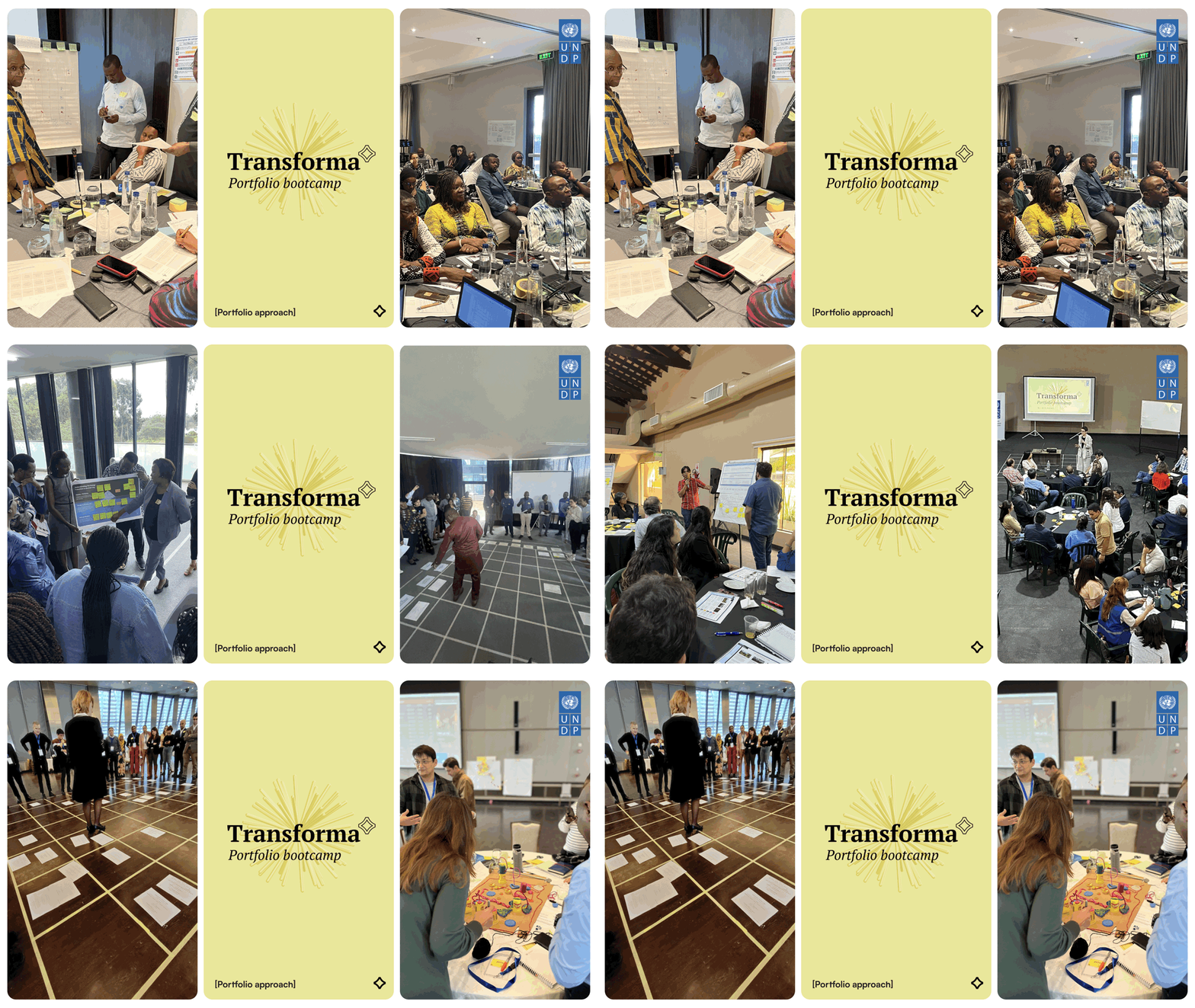
São Tomé and Príncipe
Workshop with government, UN agencies and civil society organisations. At this moment, participants are identifying existing dynamics in the system to get closer to and learn from: the practices, organisations and people already doing interesting work that can be accelerated for the social cohesion intent.

Paraguay
Workshop with government, civil society organisations, academia and other development partners, discussing what is happening in Paraguay's entrepreneurial ecosystem, from the symptoms visible on the surface down to the structures, power and mental models underneath.

Mozambique
Workshop with government, civil society organisations and development partners, discussing the organisational set-up needed to enable the system and portfolio approach. At this stage, participants are drawing the connections between the institutions and sectors that need to work together for meaningful change across the three Mozambique portfolios.
Challenges, an eternal beta with limited time for updates.
The practice keeps moving faster than we can update the materials, so the toolkit lives in a permanent beta. Challenges along the way:
- Design capacity is unevenly distributed across UNDP, which makes it hard to keep evolving the methodology.
- The organisation's software and platforms are not always the best fit for developing and managing visual design assets, which makes it hard to disseminate them and adhere to the branding guidelines.
- Having canvases and slides translated across English, Spanish, French and Portuguese and Arabic (only the main methods) was a big win, but because the canvases keep improving, keeping every language in sync has become a bottleneck. Any designer will recognise the quiet despair of knowing exactly how many discrepancies each iteration creates.
- Facilitating in two languages (English plus a local language) doubles the work of keeping both versions updated.
- Visualising portfolios in a way that non-designers can update is still unsolved: the most useful and aesthetically pleasing visualisations still need a designer or dedicated software.
Work/Academic inquiries? Reach me on Linkedin
“I am not free while any woman is unfree, even when her chains are very different from my own.” Marielle Franco
© 2026 Simone Uriartt